
Across the last ten years, a solitary foreign policy framework has brought in participation from more than 140 sovereign states. That reach stretches across Asia, Africa, Europe, and Latin America. It represents one of the largest-scale worldwide economic programs in modern history.
Frequently imagined as new trade corridors, this BRI Unimpeded Trade involves far more than brick-and-mortar development. Fundamentally, it fosters deeper capital connectivity and economic collaboration. Its objective is joint growth via deep consultation and joint contribution.
By cutting transport costs and helping create new economic hubs, the network acts as a catalyst for development. It has channelled major capital with support from institutions like the Asian Infrastructure Investment Bank. Projects extend from ports and rail infrastructure to digital and energy links.
But what tangible effects has this connectivity had for global markets and regional economies? This review explores a ten-year period of financial integration efforts. We will look at both the opportunities created and the contested challenges, including concerns around debt sustainability.
We begin with the historical vision that revived trade corridors. We then assess today’s financial mechanisms and their real-world effects. In closing, we look ahead toward future prospects within an evolving global landscape.
Main Takeaways
- The initiative connects over 140 countries across multiple continents.
- It emphasizes financial connectivity and economic cooperation, not only infrastructure.
- Its guiding principles include extensive consultation and shared benefits.
- Key institutions like the AIIB help fund various development projects.
- The network seeks to reduce transport costs and create new economic hubs.
- Discussion continues over debt sustainability and transparency in projects.
- This analysis traces its evolution from historical roots to future directions.
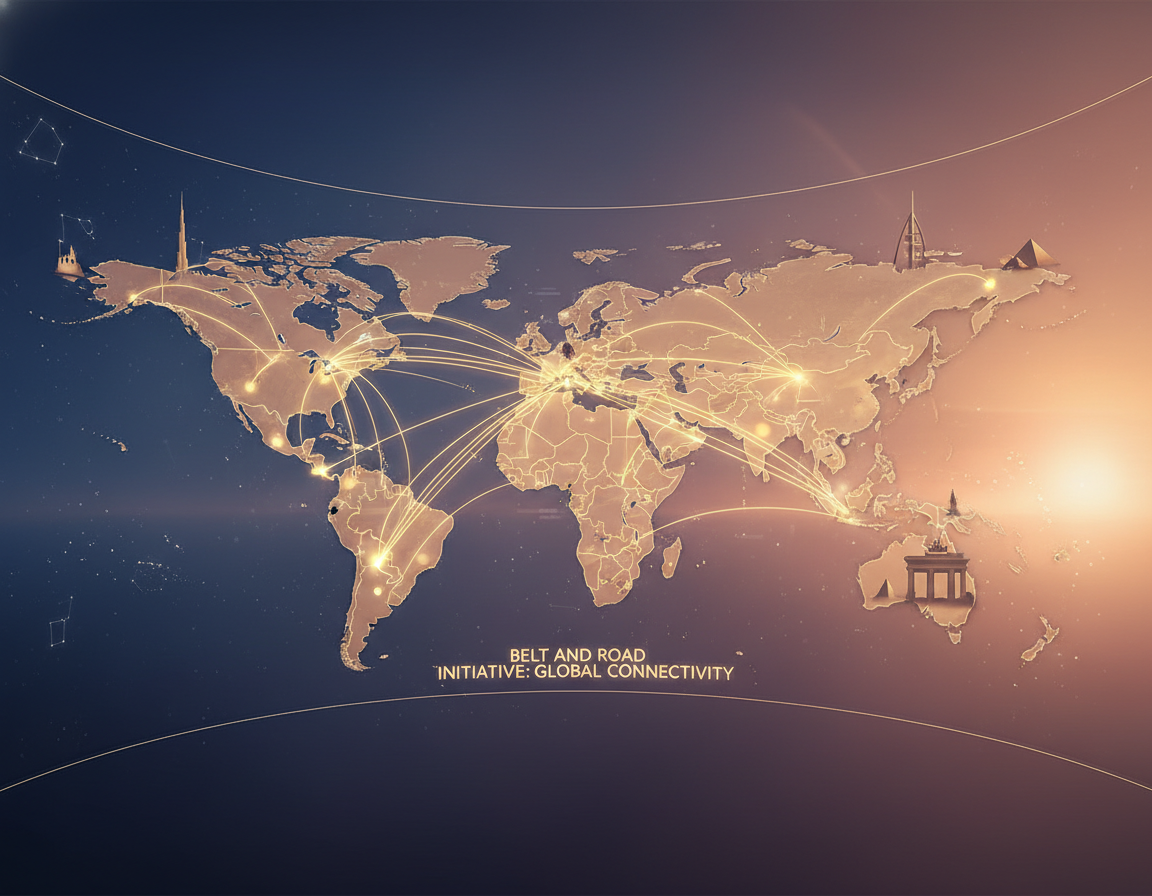
Introducing The Belt & Road Initiative (BRI)
Long before modern globalization, a network of trade routes connected distant civilizations across vast continents. Those ancient pathways carried more than silk and spices alone. They carried ideas, innovations, and cultural practices across Asia, the Middle East, and Europe.
This historical concept finds new life today. The modern belt road initiative is inspired by those old connections. It reinterprets them for modern economic demands.
From Ancient Silk Routes To A Modern Development Strategy
The early silk road operated from the 2nd century BC to the 15th century AD. Caravans traveled great distances through difficult conditions. In many ways, these routes were the internet of their time.
They facilitated the trade of goods like textiles, porcelain, and precious metals. More significantly, they spread ideas, religions, and artistic traditions. This exchange shaped the medieval era.
Xi Jinping unveiled a modern revival of this concept in 2013. The vision aims to improve regional connectivity at a massive scale. It seeks to build a new silk road for the modern era.
This modern framework addresses today’s development challenges. Numerous nations seek infrastructure funding and trade opportunities. The initiative provides a platform for collaborative solutions.
It represents a substantial foreign policy and economic strategy. Its goal is inclusive growth across the participating countries. This approach contrasts with zero-sum geopolitical rivalry.
Core Principles: Extensive Consultation, Joint Contribution, Shared Benefits
The entire BRI Financial Integration enterprise rests on three foundational principles. These principles inform all projects and partnerships. They ensure the initiative remains cooperative and mutually beneficial.
Extensive Consultation means this is not a one-sided undertaking. All stakeholders can contribute through planning and implementation. The process respects varying development stages and cultural contexts.
Participating countries openly discuss their needs and priorities. This cooperative approach defines the initiative’s identity. It strengthens trust and lasting partnership.
Joint Contribution emphasizes that everyone plays a role. Governments, businesses, and communities bring their strengths to the table. Each participant leverages their comparative advantages.
That can mean providing local labor, materials, or expertise. The principle helps ensure projects maintain broad ownership. Success relies on collective effort.
Shared Benefits reinforces the win-win objective. Opportunities and outcomes should be shared in a fair way. All partners should experience clear improvements.
Potential benefits include job creation, technology transfer, or market access. This goal aims to make globalization more even. It aims to leave no nation behind.
Taken together, these principles form a framework for cooperative international relations. They answer calls for a more inclusive global economy. The initiative presents itself as a tool for shared prosperity.
In excess of 140 countries have participated in this vision to date. They perceive potential in its approach to cooperative development. In the sections ahead, we explore how this vision becomes real-world impact.
The Scope Of Financial Integration Under The BRI
The physical infrastructure capturing headlines represents only one dimension of a far broader economic integration strategy. Ports and railways provide the tangible connections, financial mechanisms make these projects possible. This deeper cooperation layer turns isolated construction into lasting economic corridors.
Genuine connectivity demands aligned capital flows and investment. The approach goes beyond simple construction loans. It covers a broad suite of financial tools designed to support long-term growth.
Beyond Bricks And Mortar: Building Financing For Connectivity
Financial integration functions as the lifeblood of physical connectivity. Without coordinated finance, big infrastructure plans remain plans. The approach addresses this through varied financing approaches.
These tools include traditional loans for construction projects. They also encompass trade finance to move goods along new routes. Currency swap agreements facilitate smoother transactions among partner nations.
Digital and energy network investment receives significant attention. Modern economies depend on reliable power and data connectivity. Investing in these areas supports holistic development.
This People-to-people Bond approach creates real benefits. Reduced transport costs make industrial output more competitive. Companies can site production sites near new logistics hubs.
This kind of clustering produces /”agglomeration economies./” Related firms concentrate in specific areas. That boosts efficiency and innovation throughout entire industries.
The movement of resources improves sharply. People, materials, and goods flow more freely. Economic activity rises through newly connected corridors.
Key Institutions: The AIIB And The Silk Road Fund
Specialized financial institutions have key roles in this approach. They marshal capital for projects that might seem too risky for traditional banks. Their emphasis is on transformative, long-term development.
The Asian Infrastructure Investment Bank (AIIB) works as a multilateral development bank. It includes around 100 member countries from many parts of the world. This diverse membership helps ensure diverse views in selecting projects.
The AIIB prioritizes sustainable infrastructure across Asia and beyond. It aligns with international standards for transparency and environmental safeguards. Projects must demonstrate measurable development impact.
The Silk Road Fund operates differently. It is a state-funded Chinese investment vehicle. The fund provides equity and debt financing for targeted ventures.
It regularly partners with co-investors on large projects. This collaboration spreads risk and pools expertise. The fund concentrates on commercially viable opportunities that have strategic significance.
Together, these institutions create a powerful financial architecture. They direct capital toward upgrading productive sectors across partner nations. This helps move economies up the value chain.
Foreign direct investment gets a notable boost via these mechanisms. Chinese firms gain opportunities in new markets. Local sectors access technology and know-how.
The focus is upgrading the /”productive fabric/” of participating countries. This can mean building more advanced manufacturing capacity. It also involves developing skilled workforces.
This integrated financial approach aims to make major investments less risky. It helps create sustainable economic corridors rather than standalone projects. The emphasis remains on mutual benefit and shared growth.
Grasping these financial tools prepares us for analyzing their real-world impacts. In the next sections, we explore how this capital mobilization turns into trade shifts and economic transformation.
A Decade Of Growth: Charting The BRI’s Expansion
What was launched as a blueprint for revived trade corridors has grown into one of the largest international cooperation networks in contemporary times. The first ten years tell a story of extraordinary geographical spread. This expansion reflects broad global demand for connectivity solutions and development finance.
Looking at a map of participation reveals the initiative’s sheer scale. It shifted from a regional idea to worldwide engagement. This expansion was neither random nor uniform, following clear patterns linked to economic needs and strategic partnerships.
From 2013 To Today: A 140-Country Network
The initiative began with an announcement in 2013 that set out a new framework for cooperation. Each subsequent year brought new signatories to Memoranda of Understanding. These documents signaled official interest in exploring collaborative projects.
Most participating countries joined during the first wave of enthusiasm. The peak period ran from 2013 through 2018. Across those years, the network’s foundational architecture took shape across continents.
Today, the group includes more than 140 countries. That represents a substantial portion of global nations. The collective population across these BRI countries spans billions of people.
Analysts like Christoph Nedopil track investment flows to map the initiative’s evolving footprint. No single official list of member states exists. Instead, engagement is gauged through agreements signed and projects implemented.
Regional Hotspots: Asia, Africa, And Beyond Them
Participation clusters heavily in specific geographical regions. Asia naturally forms the core of the full belt road initiative. Countries across the region seek large upgrades to infrastructure systems.
Africa represents another key focus area. Africa has major unmet needs for transport, energy, and digital connectivity. Scores of African countries have signed cooperation agreements.
The strategic rationale behind this regional concentration is clear. It joins production centers in East Asia with consumer markets across Western Europe. It additionally connects resource-rich zones in Africa and Central Asia to global trade routes.
This geographic footprint supports broader economic development aims. It facilitates more efficient movement of goods and services. The network builds fresh corridors for commerce and investment.
Its reach goes well beyond Asia and Africa. Eastern European countries participate as gateways between Asia and the EU. Multiple nations across Latin America have also joined, seeking investment in ports and logistics.
This expansion reflects a purposeful diversification of economic partnerships globally. It moves beyond traditional alliance structures. This framework offers an alternative platform for cooperative development.
The map tells a story of opportunity-driven response. Countries with major infrastructure gaps saw promise in this cooperative framework. They engaged to find pathways to speed up their economic growth.
This geographic foundation sets the stage for examining specific impacts. Next, we explore how trade, investment, and infrastructure have changed within these diverse countries. The first decade laid the network; the next phase aims to deepen those benefits.
Related: How Belt and Road Financial Integration Supports Infrastructure Financing Gaps